 705-998-2017
 vpm@visture.ca



Peterborough Cut Development Charges in Half. Here’s What It Means for Your Next Build—and Why Eligible Coach Houses Pay Zero.
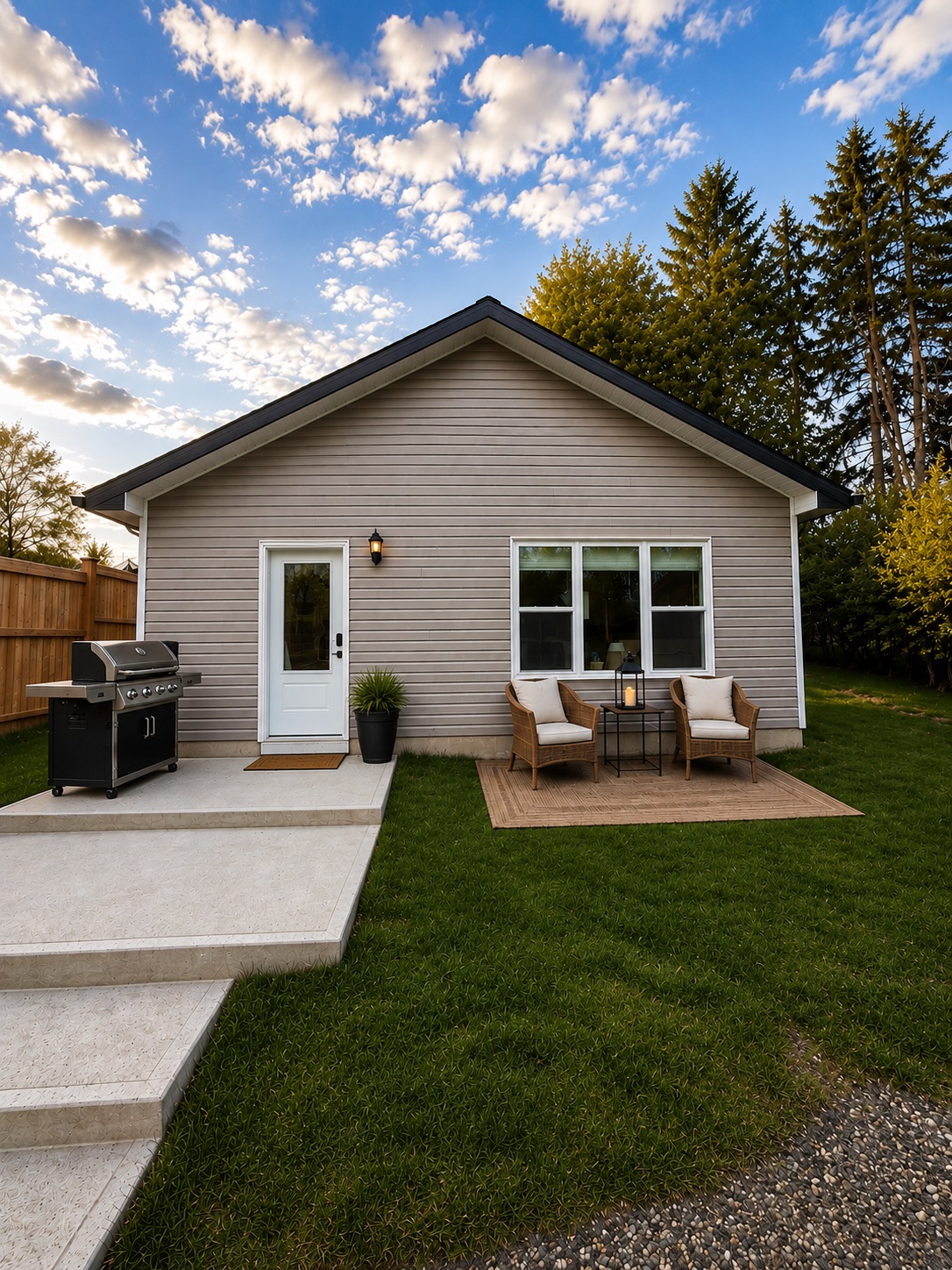
Peterborough’s development charge cut can take tens of thousands of dollars off the cost of a new residential project. But for homeowners considering a coach house, there’s an equally important point:
An eligible coach house already pays zero municipal development charges.
That exemption existed before the City’s 50% reduction. If you’re considering a backyard rental unit or a separate home for family, it’s a valuable distinction—and a good reason to look closely at what your property could accommodate.
JG is covering the change on REIN IT IN this Friday, October 9. Here’s what Peterborough homeowners and investors should know.
What did Peterborough change?
On June 15, 2026, Peterborough council voted 10–0 to reduce development charges by 50% for all new residential development, including homes built for sale and rental housing. The decision also included area-specific development charges. Read the council decision coverage.
Development charges help municipalities pay for infrastructure needed to support growth. Peterborough’s published city-wide residential rates now list:
- Single or semi-detached home: $34,302 per unit, down from $68,604.
- Other multiples, such as qualifying plexes and row housing: $24,825 per unit, down from $49,650.
- Apartment-type units: $21,278 per unit, down from $42,555.
The City lists the reduced rates through July 1, 2029. Area-specific and water services charges must also be considered where applicable. Separate school board development charges were not part of the municipal cut; the current published total is $1,770 per chargeable residential unit. See the City’s development charge schedule.
What does that mean in actual dollars?
Using the city-wide rates above, the reduction represents approximately:
- $34,300 saved on one fully chargeable new single-detached home.
- $99,300 saved on a new fourplex with four chargeable Residential B units.
- $127,700 saved on a six-unit building with six chargeable apartment-type units.
These are illustrative comparisons before project-specific exemptions, credits, rental housing discounts or other adjustments. Your building’s classification and circumstances determine the actual amount payable.
For a project you previously priced out, this is a reason to revisit the budget. Lower development charges can make a meaningful difference to upfront costs, although construction, servicing and financing still need to work together.
Coach houses: eligible additional units pay zero
If your coach house qualifies for Ontario’s additional residential unit exemption, its municipal development charge is $0.
Under Ontario’s Development Charges Act, the exemption includes one additional dwelling in a separate accessory building beside an existing detached, semi-detached or row house, provided the main house contains no more than two units and there are no residential units in another accessory building.
Eligible second and third units inside the main house can also be exempt. Common arrangements include:
- A main home plus one backyard coach house.
- A main home, a basement suite and one coach house.
- Three units within the main house, with no separate residential unit in an accessory building.
The exemption depends on the arrangement and statutory conditions—not simply calling a building a “garden suite.” See Ontario’s additional residential unit exemptions.
For an eligible coach house, the 50% cut does not create a new saving on a charge that was already zero. Its existing exemption remains a major advantage.
Why that matters for your property
A coach house lets you explore adding a home on land you already own. It could provide a long-term rental, independent space for an aging parent, or a place for an adult child to live nearby.
Avoiding municipal development charges is one reason a coach house can be a strong-value option. The next step is understanding the property itself: available space, access, servicing, design and construction costs.
Zero development charges also does not mean zero project fees. Permits, utility connections and other applicable costs still belong in the budget. Education development charges have separate exemption rules.
Before committing, confirm your specific project’s charges and exemptions with the City of Peterborough’s Building Services Division.
How does the funding fit in?
The reduction is connected to Ontario’s Development Charge Reduction Program, part of the $8.8-billion Canada–Ontario Partnership to Build. Participating municipalities commit to reductions of 30% to 50% or more for three years, with funding supporting infrastructure such as roads, water and wastewater systems. Read the provincial program details.
Peterborough confirmed it submitted applications for road projects and water and wastewater infrastructure. An application is not a confirmed funding award. Read the City’s application update.
At the June vote, City staff described the commitment as having “no off-ramp,” explaining that the reduced rates would remain for three years even if funding did not arrive. Read the reported staff explanation.
Peterborough is part of a broader shift: Toronto has committed to cuts of 40%–60%, depending on unit type, while Barrie has committed to a 50% reduction. Toronto announcement, Barrie announcement.
Find out what’s possible in your backyard
Start with Visture’s coach home calculator to explore your next step.
Then book a free site consultation with Visture Construction. We’ll help you assess your property, review the practical requirements and develop a clearer picture of the project’s scope and budget.
Whether you’re planning a new residential build or an eligible coach house with zero municipal development charges, start with the numbers—and a plan for your specific property.
